Wednesday, December 19, 2007

Wake Up Call - Earthquake At 4:14 A.M.

~A Mild 4.0 - This Time~
Click on map to enlarge
All maps in this post are courtesy of the United States Geological Survey (USGS).
I added some of the text to personalize the information.
Peggy and I were jolted awake by a shaking rattling house at 4:14 this morning.
It was a relatively mild quake but it served, once again, to remind us of where we live and what we can expect from the geology of our locale.
As life-long residents of Southern California, and most particularly, because we've always lived on, or at the edges of, California's Transverse Range and the infamous San Andreas Fault , we're both well experienced with earthquakes.
The above map shows significant earthquakes in Southern California over the 25 year period between 1970 and 1995. I have added the numbers 1 through 4 to the map to show where I've lived my life, in close proximity to the most frequent and strongest quakes. Peggy has lived her life in the same places, except that she was born in the San Fernando Valley, where we grew up within a few miles of each other.
Todays little temblor (shown on the USGS shake map below) was a polite wake up call for us to make sure we're as prepared as possible for the impending disaster somewhere ahead of us.
In the last map of this post I've highlighted an oval which shows a 100+ mile section of the San Andreas Fault that is way overdue for a major quake, and, where we live in relationship to the fault.
It's not a matter of if, but when.
You can read a related National Geographic News article, by clicking here, which explains the known history of this segment of our infamous fault, and what we might expect in the very near future.
This isn't lunatic fringe doomsday prophesy, it's the factual reality of the geology of places like this, which straddle the edges of tectonic plates.

Today's Mild Temblor

The closer you are to the red areas on the above map, the more frequently you can expect earthquakes to occur.

Click on the above map to see the highlighted overdue section of the San Andreas Fault, which could very well bring us the next Big One, if the, also overdue Hayward Fault, in Northern California, doesn't beat us to it (again, you can see a related National Geographic News article by clicking here).

Fires! Floods! Earthquakes!

Why would anyone, in their right mind, want to live in the crowded, congested, expensive, smoggy, crime-ridden sprawl of Southern California when they also know, for certain, that some catastrophic disaster always lies just ahead?

Well, I can't speak for the millions of people who came here from somewhere else, for the climate, the scenery, a job, or to make it big in Hollyweird, whatever. In fact, it wouldn't break my heart if they all went home.

Because...

For me, it's simply about Place!

And, regardless of those who would question whether I ever had a right mind to be in, I'm going to explain why place is important to me anyway.

I was born here 62 years ago, at the west end of this gorgeous range of transverse mountains. And, if overdevelopment, sprawl, pollution, squalor, and outrageous prices hadn't driven me off, I'd still be living with the fires, floods, and earthquakes of Santa Monica, Reseda, or Topanga Canyon.

But somewhere along my journey I realized that we can't keep trashing the places we call home, and then just move on, because, as we should understand by now, we're about to run ourselves completely off the planet.

So, instead of invading someone elses part of the world (maybe even yours), I'm hanging on here, at the easternmost end of my home on the Range, where I can still afford to live, where I'm familiar, and where I'm surrounded by the relatively unspoiled beauty of Southern California's San Bernardino Mountains.

A few minutes walk from our dwelling, in any direction, takes me home to the nature of my place.

Fires, floods, and earthquakes define Southern California every bit as much as our beaches, mountains, and deserts.


They're the interacting forces of nature, which together, created the once gorgeous wide-open freedom of this place we call home.

Plate tectonics built these mountains and coastlines, while floods carved the canyons and filled the valleys with rich fertile soil, and wildfires groomed the dense forests and chaparral, allowing magnificently diverse gardens of botanical inventions to evolve into existence, along with a corresponding abundance of animal species.

The Transverse Range of Southern California is my home, I love and respect this place deeply. What is good for the nature of these mountains is also good for me.

So, naturally, I would also have a great respect for wildfires, floods, and earthquakes, the most fundamental building blocks of my place.

It's not my goal in life to control the forces of nature, it's my goal to try and learn to live in harmony with them.

Our small cabin is a sturdy wood frame structure which came through the 7.3 magnitude Landers Earthquake (July, 21, 1992 - 4:57 A.M.), and the 6.4 Big Bear Quake a few hours later, relatively unscathed.

Most everything inside the house was damaged or broken from the severe shaking, yet aside from a hairline crack in the foundation, and some slightly tweaked kitchen cabinets, the structure is still sound.

That doesn't mean the place will make it through the next shaker, especially if it's an 8+ magnitude 'mother of all quakes' along the San Andreas Fault some twenty miles from here.

And, a wood frame house doesn't seem the ideal structure to inhabit in a fire prone alpine forest either, does it?

We're also in a bit of a flood plain and have twice experienced our home becoming and island in two-foot deep floodwaters.

Fortunately the builder was aware of that problem and built our place nearly 3 feet above ground but some of the neighbors aren't so lucky.

Still, the unpredictable and extreme weather predicted as part of global warming & climate change could bring us heavier rains than we've ever known before.

If this house is eventually destoyed by fire, flood, or quake, and I live through it, maybe I can construct a dwelling more compatible with the forces of nature (or go back and reclaim my cave in the Santa Monica Mountains).

Architect Nader Khalili, of the Cal-Earth Institue in nearby Hesperia, has had the plans for this environmentally friendly earth home (click here) approved by the County Of San Bernardino.

The house was structurally tested and proved to be very earthquake and fire resistant, and, if thoughtfully situated would withstand floods too.

A wood frame home in a forest makes about as much sense as mobile home parks in the hurricane ravaged gulf coast states, or in tornado alley, or as skyscrapers, freeways and bridges do in earthquake country.

Nature can accomodate us quite sufficiently if only we would live in accordance with her counsel, or even with plain old common sense.

Any species long term survival is all about how they adapt to the opportunities, and the limitations, of the places they inhabit. Humans have a relatively brief history, as species go, yet we have already forgotten how to live, in, and of, our places. We now live upon, and separate from them.

I believe our relationship with our place should be an open reciprocal exchange, like a good marriage. Instead, we conquer the nature of our places, subduing them, like an abusive spouse dominates a potential partner. And when our places become stifled and debased by our control, we covet the wild, free, beauty we see elsewhere, and move along to consume new horizons which soon resemble what we left behind.

In our relentless quest for power, control, and omnipotence, we have essentially divorced ourselves from nature and the ability to love our places for what they are. We mold and form those places to be subservient, something nature's not capable of being.

But the lessons of our time tell us with blunt urgent clarity that we cannot continue living out of context with the nature of our place, whether it be Los Angeles, New Orleans, Greensburg Kansas, San Francisco, Big Bear Lake, or Planet Earth.

Today, on so many levels, we humans are confronting the dire consequences of trying to subjugate nature.

The immediate reality of a grossly overpopulated world, addicted to an economic system that demands growth in the face of rapidly dwindling resources, and the now perpetual wars being waged to gain control of those resources, is sobering and scary.

"Go Forth And Multiply" worked OK, I suppose, until we overshot the carrying capacity of our whole blessed biosphere!

We are now face to face with the man-made calamities of global warming, ozone depletion, climate change, rising sea levels, depleted fisheries, mass extinctions, peak oil and a subsequent economic collapse, as well as nature's relatively benign fires, floods, earthquakes, volcanism, hurricanes & tsunamis. And none of this is lunatic fringe doomsday prophecy either, it's here now, whether we like it or not.

We've been like the Mr. Magoo of cultures as our myopic clumsy civilization bumbled its way into a self-made disaster which threatens the entire globe.

Whereas, throughout human history, extreme events in the natural geology, or weather, of any given place typically affected only those areas. Places where more attuned beings, living with an accumulated, respectful, historical knowledge of their places, might avoid the worst aspects of predictable natural events (like the Sea Gypsies of Surin Island did during the 2004 Indonesian tsunami).

So, the very hard realities of humankind in this Twenty-First Century A.D., and our dismal failure in adapting to our ecosystem, should be our true Wake Up Call. Nature will regenerate much of what we've destroyed (sometimes by fire, flood, and earthquake), and create countless new life forms too. Mother Nature is generous and will even include some of us in the future if we will only cooperate.

A big part of my earthquake survival kit (or should I say, my generic, one-fits-all, disaster kit?) is my awareness of the inevitability of it all. I am mentally prepared for it and will not be disoriented or confused as to how such events could happen. And that applies equally to the ecological and economic cataclysms now unfolding all around us.

In the very near future the unwieldy materialistic lives we now know will have ceased to exist. For much of my life I've seen this coming and I fully understand why we're on the verge of societal collapse. So, if I actually live to see the worst of it, at least I won't be stumbling around in a dumbfounded state wondering how it happened, or why.

I realize the dizzying momentum of all this is overwhelming to many people, but our collective lack of will to change course still pisses me off!

It's not something we want to envision, but young people, alive right now, are going to witness the human population of Earth decline, substantially, to something resembling sustainable numbers.

That is a prediction based on a lifetime of open-minded witness to the verifiable down-to-earth facts of the realities we live with, not on some end-times religious dogma.

I'm not predicting the end of the world, just the decline of the human species.

And, whether you think this prediction qualifies me as a fringe lunatic doomsday prophet or not, history will corroborate the accuracy of this disturbing observation, if anyone's left to record it.

And, when my time comes, whether I succumb to old age, disease, or die as the result of one of these disasters---either natural or man-made---I hope to be right here where I belong, at home, in Southern California, the place I know and love.

In the meantime you will find me, for a good part of each day, outside, walking, and worshiping what's left of the lost paradise that once graced the west coast of Turtle Island.

postscript-

This post is now complete. My personal experiences with Southern California disasters, which I was going to insert here, will now be a future post.

Labels: , , , , , , ,

Sunday, June 17, 2007

A Father's Day Letter To Claude Hampson

DAD - IN THE EARLY 1980s
Click on photo to enlarge - photo credit unknown
It was a much different world back in 1960!
For me, it was a world of cars, girls, & AM Radio, in that order, and I was working at my stepdad's autobody shop after school, on Saturdays, and during summer vacation.
This was no ordinary body & fender joint, and dad was no Bondo© hack! He was a master metalcrafter, among many other things, and worked specifically on imports, which were still rare in those days, and mostly owned by car enthusiast perfectionists who doted & fussed over their beloved machines.
The shop was always full of pretty sports cars, like MGs, Triumphs, Austin Healys, Alpha Romeos, Porsches, and Jaguars.
And, very often with outrageously expensive exotics too, from gull-wing Mercedes 300 SLs, to Ferraris, Bugattis, Aston Martins, Alpha Bats, Facel Vegas, Lamborghinis. or AC Ace/Bristols (before Carroll Shelby modified those same chassis & bodies to accomodate Ford V-8s and created the original Shelby Cobras)
And there were some Volkswagens too, and VW Karmann Ghias, and Renaults, Peugeots, Citroens, Borgwards, Vauxhalls and such.
But the cars I loved the most were the ones my stepfather built himself, like the Formula III car, Andrea, (named after the owner's daughter), which he designed & built, from the ground up, in the late '50s for Chuck Nerpel, editor of Motor Trend Magazine, and, especially, the 1927 Model T Ford Track Roadster he built for his friend Jack Thompson in the mid-fifties.
I still loved cars in those good old days---before we knew about global warming, and before I could look back upon a half century of the horrific consequences resulting from freeways, urban sprawl, overpopulation, pollution & industrialization---and long before my brilliant stepdad was stricken with mind-erasing Alzheimers.
My dad doesn't know me anymore and he lives in a care facility close to my mom's place in Utah.
For Father's Day, they asked the sons & daughters of the male residents there to send letters and pictures to be shared with the group as they assembled our Dads, and the family & friends who could attend, for a celebration this weekend.
Dad probably didn't understand a word of my letter, or even look at the pictures, but my mom said there wasn't a dry eye among the staff and visitors as the letter was read.
When my stepdad began to lose his faculties, he and I had been good buddies for many years, and I'm very thankful for that because there was a time when we wouldn't even speak to each other.
In my later teens, we had a few very tough years, as sons & fathers often do, and I was a wild one, an angry delinquent from a broken family. So we had a blowout!
Too rebellious to follow rules, I ended up living on the streets for quite some time.
I had nowhere else to go because my real father, a diabetic (and a very talented guy too, by the way), drank himself to death a few years after my mom divorced him.
My stepdad had some rough edges too, and didn't adjust very smoothly to becoming the instant father to four rowdy kids. But we got through those years, and, after I grew up a little, became very close friends again.
We're all human, we all make mistakes, and forgiveness may be the most important ingredient of love.
I've posted my Father's Day Letter* below.
But dad doesn't grasp what the words are about anymore, even though I purposely included many names, places, objects and events that should trigger his memory.
Still, it's Father's Day, and I'd like someone, anyone, to know how I feel about my dad.
Dear Claude,

I’m writing to wish you a very Happy Father’s Day and to say that I love you. I would also like to try and express how much I appreciate the great influence you’ve had on my life.
I am now 61 years old and you’ve been the only father I’ve known for 47 years.

You married my mother, Lois, when I was 14 years old, taking me under your wing and giving me a job at your business, Claude’s Body Shop, in Reseda, California.

In those years you were well-known and respected as one of the finest metal-workers, welders, tool & die makers, and auto-body craftsmen in Southern California.

Working under your example taught me to truly appreciate fine craftsmanship and the value in knowing how to do many things well.

I watched you build Formula III race cars, hot-rods and customs. I witnessed your restoration of many priceless antique classic cars, including that blue 1930s Bugatti T51A, a priceless one of a kind Alpha Bat, and a very rare Facel Vega.

Most, if not all, of the parts for those cars had to be hand-built from scratch and you always managed to do an impossibly beautiful job of it.

You were gifted with an extremely rare native genius, which, combined with your uncommon talents for artistic craftsmanship, innovative invention, and skilled know-how, put you in great demand in each of your fields of expertise.

Your talents seemed easily transferable to any craft you chose to practice. I watched you build gorgeous kitchen cabinets for our house in Van Nuys and remember you taking up many forgotten or difficult arts. You could do absolutely anything that captured your interest, and your interests seemed boundless.

You could hand paint exquisite realistic wood-grain patterns on any surface, a talent which came in quite handy for restoring the metal dashboards of antique cars which were often painted to look exactly like walnut burl or some other rare exotic wood. And I remember you painting a plain household door to look just like knotty-pine.

I remember when you got a centrifuge and took up lost-wax casting, when you found an old forge and set it up in the garage to practice hand-forging, all with superb results. You were also a master machinist, in great demand because of your unmatched skills with milling machines, lathes, and any other machinery you could get your hands on.

All the aspects of your skills and talents had a huge impact on my life. I still strive to be good at many different things, as you were, and, while I don’t have the same set of skills that you did, I'm quite artistic and productive in my own ways, through arts & crafts, photography, graphic design and such. And, to this day, I still do all the construction and repairs to our home, as you always had.

In the 1980s, I built the laundry room onto my house as a result of skills and confidence I learned from you. After I retired I rebuilt my roof to accommodate insulation, replaced all of our windows and doors, and recently installed pine-plank flooring. Now I’m preparing to remodel our kitchen and build the cabinets myself.

I do our own plumbing and remodeling, as you did, rarely hiring outside help, because, like you, I’ve learned that I can usually do a better job of it, and have the rewarding satisfaction of doing the work, being self-reliant, and saving money too.

Back the 1970s, from your example, I restored my old Datsun pick-up to mint condition, even rebuilding the engine myself.

Around that same time I took up stained-glass window making and built a bunch of nice looking windows which still grace several custom homes in Topanga Canyon.

The last window I made, in the late ‘70s, was for you and mom, for the front door of your Granada Hills house, where you saw it every day for decades, and now mom has moved it to the new house there in Elwood, Utah.

As you can see, being witness to your fine craftsmanship and working under your guidance, even for just those few short years, greatly enriched my life.

You showed me how to lay out a hood, or a body panel, and scribe it accurately for punching louvers, and how to properly prepare a car for a show-quality paint job. You taught me how to dis-assemble mangled cars and how to meticulously re-assemble them once the parts were repaired or replaced. You tried to teach me metalworking, welding, and machinist skills, even when I didn't really have an affinity for that stuff. But most importantly, you taught me to use care at every step, and to pay attention to details, and I became very good at that.
And, the fact that you trusted me to work on some of the world's rarest & most valuable cars gave me a great feeling of confidence.

Working at your shop, I developed practical and mechanical skills which have been extremely useful to me throughout my life. The education I got from you has been far more valuable than anything I learned in school, with the exception of the basic skills of reading, writing, and arithmetic, most of which mom taught me.

But still, you’ve given me so much more than all that, because you truly became my father.

You often reminded me of how important it was that I learn a trade so I could make a decent living for myself. You instilled in me a work ethic, and the desire to be responsible, which has enabled me to have a home and a family of my own for the past 28 years.

And, like most dads, you taught me how to drive a car, but not just any old car. I learned to drive in a classic red 1958 Triumph TR3 sports-car. And then, just days after I’d gotten my learner's permit, you let me drive that hand-built, now classic hot-rod around the block.

The 1927 Model “T” Ford track roadster you built for Jack Thompson in the '50s was featured on the cover of Hot Rod Magazine in August of 1958 (I sent a copy of the cover with this letter). Then, in the late ‘80s, you were consulted to assist Tri-C Engineering with part of its complete restoration, and today the car is considered one of America’s all-time classic hot-rod roadsters (I’ve enclosed some photos and stories about that too). Last I heard, the roadster was at Petersen’s Classic Car Museum in Los Angeles, but I got to drive it down old Reseda’s Canby Avenue, with you as my passenger, way back in 1961 when I was only 15 years-old. I was so nervous my clutch leg wouldn’t stop shaking. Driving that loud wild looking hot-rod is one of my all-time favorite memories.

You helped me get my first car, a 1953 Studebaker, my second car, a ’56 Chevy, and several years later, you gave me your beloved 1941 Ford pick-up, which had been given to you by your best friend Phil Freudiger (Muroc 200 MPH Club) many years before.

During my early twenties when I was on my own, after those awfully difficult teenage years, you and I became good buddies. So, the late 1960s, ‘70s, & '80s were great times for us. Remember the season’s passes we got to Busch Gardens every year, where we’d get together several times a month, with family and friends, to have an absolute blast?

We went to countless swap-meets and car shows together, to the Renaissance Pleasure Faire a couple of times, and often met for Sunday brunch, or went out to dinner or movies. You came up to Topanga Canyon and partied with my hippie friends when we had our pig or goat roasts. We went to wild counter-culture plays at the Topanga Community House.
Oh, we had such good fun then didn’t we?

I miss those days very much, when we were all so young and alive, and I wish we lived closer to each other so I could visit you more often.

Peggy and I enjoyed seeing you so much when we were there last October. We loved taking you out for that ride to see the new house and visiting with you there for part of the day. The next time we come to Utah we hope to do that again.

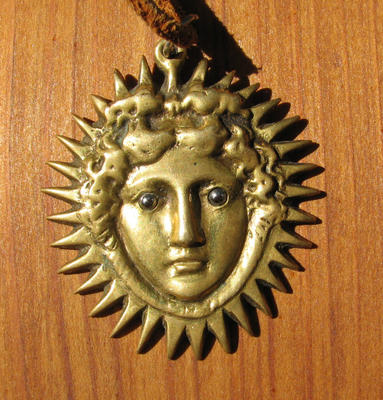
I’ve enclosed some pictures with this letter that I thought you might enjoy looking at: my favorite photo of you & mom, dancing in the 1980s; two pictures of your grandkids; some of Peggy & I; and one of me and my life-long friend Charlie. I also sent some photos of your now famous roadster, and a picture of that brass sun-pendant you made for me by the lost-wax casting process.

Thank you dad for all you’ve given me…

I hope you have a very nice Father’s Day.
I wish I was there with you today.
I love you very much!
Your son,
Jim

DAD BUILT THIS 27 'T' ROADSTER IN THE '50s
Click on photo to enlarge - photo credit unknown/owned by Tri-C Engineering
The entire nose of this beautiful track-style roadster, from the firewall forward, was hand-formed from aluminum, as was the full belly-pan. The grille, & grille bezel, were crafted from stainless steel and the matching nerf bar was fabricated from spring steel and then chrome-plated. Dad did all the work himself, before he had his own shop, including an immaculate black lacquer paint job which he sprayed, outdoors, under a giant walnut tree in his dad's front yard.
I think dad was still building aluminum Indie Car bodies for Frank Kurtis at Kurtis Kraft in Glendale when he built the roadster.
The original pin-striping was done by Jimmy Summers. Other details I remember are that the engine is a souped-up bored & stroked '48 Mercury Flathead V-8 with finned aluminum heads, a racing cam, and three Stromberg 97 two-barrel carburetors. The dashboard is engine-turned stainless, crafted by dad, with Stewart Warner gauges, and the tail-lights are '39 Ford teardrops. Custom headers route the dual exhaust pipes through a pair of hand-made surface-mounted stainless bezels, beneath twin nerf bars, on the tail of the modified 'T' bucket. The gloss black paint is contrasted with red Kelsey Hayes wire-wheels, and red leather upholstery
The roadster was completely restored some 15 years ago by Tri-C Engineering with my dad as a consultant. Dad also made some repairs to the aluminum cowl (hood) at the time. The car now looks exactly as it did nearly 50 years ago when it was featured on the cover of Hot Rod Magazine.
This is one of the first cars I ever drove.
But, in the harsh light of 21st Century realities, my love affair with the automobile is long a thing of the past. Still, I'll never forget this little beauty...
...and I'll never forget my stepfather, Claude Hampson.
*The Father's Day Letter above is slightly edited from the original, to correct grammar, smooth out a few sentences, and include a couple of overlooked details. But, it's still 99+% the original letter.
postscript - 6/21/07
There's a substantial amount of research linking aluminum with Alzheimers and I suspect that a lifetime of forming, fabricating, machining, sanding, and welding Aluminum was instrumental in my stepfather acquiring the disease.

Labels: , , , , , , , , , ,

Thursday, August 03, 2006

$15 Studebaker - Van Nuys, California - 1971


Click on photo to enlarge

So here's the sweet old 1946 Studebaker Commander I owned when I photographed the sunset pictured below. I bought it in Topanga Canyon, sometime in late 1970, from collage and assemblage artist George Herms for $15. I was 25 years old.

George and Louise lived a couple hundred yards up the road from the old Topanga Corral nightclub where us canyon folk all socialized and danced to many of the great bands of the '60s. The Studie had been sitting up on blocks in their front yard for quite some time when George offered to sell it to me (I believe it was more gift than sale).

What it lacked was brakes, so I did a complete brake job on it, including rebuilding all four wheel cylinders, which probably cost me less than $30 in parts in those days. Aside from that, the car was in great condition, with very low mileage, and the 226 cubic inch flathead six purred quietly like my old treadle sewing machine.

The paint was a bit oxidized but a little rubbing compound, wax, and elbow grease brought back its luster, and when I removed the plastic seat covers the original mohair upholstery underneath was still in perfect condition. In the trunk I discovered one of those neat old, pre air-conditioning, bullet-shaped Thermador swamp coolers that mounted in the car window and whirled cool moist air to the interior.

The photo was taken on a drizzly fall day in 1971 out front of my old buddy Bruce's parents house on Oak Park Avenue in Van Nuys, California. Bruce works for the Post Office to this day, and is responsible for my having a postal career. Back in 1970 he talked me into taking the Civil Service postal exam with him even though working for the Post Office didn't really seem to fit in with my artsy-fartsy back-to-nature hippie dreams. But the starting pay was $3.51 an hour and I figured maybe I'd work for a couple of years, save some money and travel, or buy some land.

Little did I realize that the burgeoning '60s counterculture I loved, and was so much a part of, was coming unravelled, and that the world would very soon be a much harder edged place.

On March 8th of 1971 I began working for the United States Post Office Department at the Woodland Hills station (91364) as a Special Delivery Messenger (the patches on our linen shirts bore the image of a Pony Express rider embroidered in maroon and blue). Thirty years later, in July of 2001, I retired at $20 an hour, from the "modernized" U.S. Postal Service, Big Bear Lake station (92315), where I was the main window clerk (the patch on my polyester shirt was an ugly stylized Eagle's head in red, white, blue, and gold, meant to signify speedy service).

Much of those 30 years was spent outside delivering mail through rain, sleet, snow, heat, and dark of night, because that's the way it was done back then. In 1971 a postage stamp cost 6 cents and we delivered Special Delivery letters & packages up until 9 o'clock at night, seven days a week, for an additional 45 cent fee. In 2001 a stamp cost 33 cents and there was no longer a Special Delivery service, but you could pick up your $11.75 Sunday delivery Express Mail at the Post Office between the hours of 12 & 2 P.M., if you remembered to bring your identification.

Along with a modicum of affluence usually comes some consumerism, so in 1972, to demonstrate my environmentalist leanings, I spent $2,000 on a new, very small and economical 4 cylinder imported Datsun pick-up truck, and regretfully, sold the old Studebaker to a friend for $250.

Four years later, another much-loved Beat Generation artist from Topanga, a mentor to George Herms, my friend Wallace Berman, was killed in a head-on collision in a little Datsun truck just like mine, leaving his lovely wife and young son behind.

Years later, in 1990, when we needed a family car, we decided on a Toyota 4-Runner, at $21,000, because I wanted something sturdy that my family might be relatively safe in, it was our last car. Peggy was broadsided at a blind intersection in 1996 by a kid going about 60 miles an hour, and a beefy frame crossmember in the Toyota saved her life. Soon after the 4-Runner was repaired we sold it, on January 31st, 1997, and now we've been car-free for nearly 10 years. We didn't want to be in them anymore.

Then, on August 29th of last year, at the same time Hurricane Katrina was battering New Orleans, our 24 year old son Jimmy drove another sturdy Toyota 4X4 over a 450 foot cliff, an accident which left him legally blind, but that thankfully, he survived. Still, Peggy and I, again had to spend many dreaded hours in rented or borrowed cars to visit Jimmy in the hospital and get him to his medical appointments, but that too has now passed...

Looking at the handsome old Studebaker it's easy to understand how we Americans became enamored with our automobiles.

But at this point, in light of the realities of todays world; the global warming and climate change brought on by a hundred years of internal combustion engines, the urban sprawl, the freeways and congestion generated by automobiles, the asphalted, concreted, plasticized, polluted, smoggy filth of our civilization, and the oil & resource wars we must now wage to sustain it all (not to mention the nearly four million people dead from U.S. auto accidents), you'd think we'd be realizing there are not going to be automobiles in our future, if we are to have one.

They've certainly lost their appeal in my eyes.

In fact I've come to detest the damned things, they're an expensive, dangerous, destructive, odious, abhorrent, abominable scourge upon the land and I'd love to see them all vanish today.

What we've gained from the convenience of automobiles, for me, is not worth what we're losing in the quality of life, or the health of our ecosystem. If we won't give the cars up; hybrid, electric, hydrogen-powered, bio-fueled, or whatever, I seriously doubt there will be many human eyes left to behold the sunsets and trees of the 22nd Century.

The automobile and its infrastructure is, in my opinion, our biggest mess, aside from, and exacerbated by, our overpopulation of the planet. Clean running efficient cars won't address traffic congestion, or sprawl, and something like 60% of the pollution generated in a cars lifetime is produced during the manufacturing processes.

Here's an excerpt from my favorite Dr. Seuss book, The Lorax.

"What's more," snapped the Lorax. (His dander was up.)

"Let me say a few words about Gluppity-Glupp.

Your machinery chugs on, day and night without stop
making Gluppity Glupp. Also Schloppity-Schlopp.

And what do you do with this leftover goo?

I'll show you. You dirty old Once-ler man you!

You're glumping the pond where the Humming-Fish hummed!
No more can they hum, for their gills are all gummed.
So I'm sending them off. Oh, their future is dreary.
They'll walk on their fins and get woefully weary
in search of some water that isn't so smeary."

And then I got mad.
I got terribly mad.
I yelled at the Lorax, "Now listen here, Dad!
All you do is yap-yap and say, Bad! Bad! Bad! Bad!
Well, I have my rights, sir, and I'm telling you
I intend to go on doing just what I do!
And for your information, you Lorax, I'm figgering

on biggering

and BIGGERING

and BIGGERING

and BIGGERING,

turning More Truffula Trees into Thneeds
which everyone, EVERYONE, EVERYONE NEEDS!"

And at that very moment, we heard a loud whack!
From outside in the fields came a sickening smack
of an axe on a tree. Then we heard the tree fall.
The very last Truffula Tree of them all!


Oftentimes I feel like the Lorax, and, in fact, I'm beginning to look like him too...

...funny how one thing leads to another; sunset to Studebaker to career to tragedy to Loraxish ranting.
:~ {{{{{{

addendum -

In referring to George Herms and Wallace Berman I realize many people are not well versed in Beat Generation notables, but most of you have probably owned a picture of Wallace. He was honored by the Beatles in being chosen as one of the people for the group photo collage on the cover of their 'Sgt. Pepper' album.

And Wally greatly honored me by hanging one of my drawings on a wall in his home.
OK, so what if it was the bathroom wall above the roll of paper next to the toilet?
What better place to contemplate art?

Labels: , , , , , ,

Monday, January 16, 2006

Dirt Road Dogs...


Click on photo to enlarge

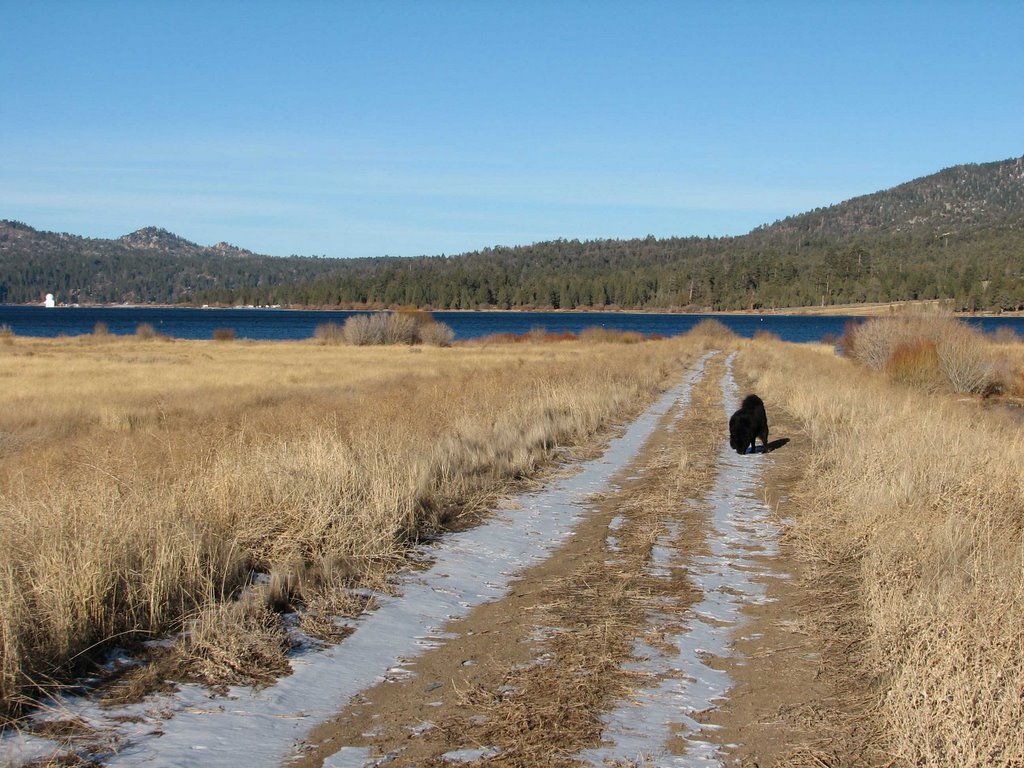
All bundled up in our warmest coats, Dallas and I walk toward the water at 8:14 this morning in one of the last best places on the south shore of Big Bear Lake. It's way below freezing and an icy wind blows strong out of the northeast. A very beautiful morning if you're dressed for it, and we are.

Dallas and I aren't big on roads, but if we have to travel one, this is the kind we like, two ruts in the dirt, minus the clunkers that it was made for.

I don't know why Dallas likes them so much, maybe because they're full of life, because they smell better than asphalt or concrete, or because he never has to be on a leash in a place like this.

I like them because they're quiet, slow, meandering, compelling, picturesque, interesting, pliant (as opposed to rigid), impermanent, and not the slightest bit oppressive, unless some drooling yay-hoo in a belching groaning 4X4 comes barrelling through, which hasn't happened to us here yet, knock on wood!

But most of all, for me I guess, it's nostalgia.

These are the kinds of roads I lived on when I was a kid, and I wish all kids could grow up someplace like this, running with their dogs, off the leash, dodging tumbleweeds & chasing dragonflies in the summer.

Tampa Avenue in Reseda, California was like this in 1952, except there was no lake. But the rutted little road did run right down through the Los Angeles River, just a cowpath through a meandering creek in those days.

Today, fifty-four years later, the kids on Tampa---now a six lane ribbon of hardened petroleum goop & gravel slathered through the midst of the 1,700,000 lost souls of The Greater San Fernando Valley---sit on their fat diabetes-prone asses in front of TVs, killing things in video games. Good practice for when they must go outside and dodge real bullets in the alleys behind their apartment slums, or in the prison yards they call schools, or in the future wars they're going to fight defending Halliburton & The Carlyle Group's freedom.

Progress? Sure, tell that to the family & friends of the suicidal 8th grader the cops shot to death as he wielded a pellet gun at his school in Longwood, Florida on Friday.

Right here, in our County of San Bernardino, kids are killing each other every week and the community solution is to hire more police, create a stronger Police State, and enforce the law!


"WE'LL TEACH THEM TO RESPECT THE LAW!", our newspaper headline screams.

Yeah, the law of private property, the law of growth, the law of profit, the law of Capitalism, the law of selfishness and greed, the law of the Military-Industrial State, the law of the rich & powerful, the law of the thief and gangster. The law of servitude & slavery, The law of No Trespassing, No Skateboarding, No Swimming, No Fishing, No Boating, No Loitering, the laws of self-annihilation.

In my 60 years I've seen enough of what we call progress, and its laws, thank you!

But, in my early childhood, I learned from the laws of Nature, the laws of beauty, magic and mystery that draw us into the world, not push us away and alienate us from it.

Generous inviting laws which point the way to our skills and nurture our interests, the laws of natural instinct that teach caution, self-preservation and wisdom.

We humans can make all the laws & rules we want, but as long as they're incompatible with the laws of Nature, as long as we think we're separate from, and above Nature, as long as we treat this planet like it's ours to do with as we please, we'll continue toward our own destruction, and the demise of what we claim to hold sacred.


I personally, am way fed up with the patriarchal tyranny of the
Corporate State, the leadership of the almighty dollar, and I've also heard e
nough about an even more patriarchal GOD that says we're too helpless to change ourselves, that only HE can save us from the eternal misery of sin, for Christ's sake!

The GOD of the same religion that has ordained the barbaric murder & torture of millions of indigenous people around the world as their land was stolen and colonized. The same religion that still defends Capitalism and Imperialism everywhere, as we today, continue robbing people of their land and livelihoods, to satisfy our bottomless gluttony, with GOD on our side.

This isn't the Dark Ages, it's the 21st Century, and we're educated enough to know how we got here, what we're doing, and exactly why we're doing it.

Just pick up the paper, it's all there in black & white, although you'll need to read some non-Western press to get the whole picture.

So let's get real friends, the future of life as we know it is very likely in the hands of those of us living today, and it's our decisions that will determine where we go from here.

Civilizations, their myths, superstitions and religions come & go, just as species do, and our civilization, and species, though young in historical & geological terms respectively, are teetering on the brink of extinction.

But we now have the information to understand our predicament, and maybe even the tools to do something about it!

We no longer have to sacrifice victims to the Volcano God, The Earthquake God, The Tsunami God, The Hurricane God, The Automobile God, or even the Almighty Dollar God! We know where & why things happen, where & how we should, and shouldn't be living, it's our choice now, not blind fate.

Los Angeles is forever doomed to destruction, as is San Francisco or New Orleans, and any other location where we choose to live out of context, or scale, with the Nature of the place.

We can't escape disasters, tragedy, or death in our lives, but we certainly don't need to be this incredibly stupid anymore, by now we should know better.

And, there's certainly no desirable future for humanity in the Orwellian nightmare that civilization is becoming before our very eyes.

For the sake of our kids, of their future, of our species, of all species, everything we do & say now is important.

But to pretend there's hope in this system isn't optimism, it's either ignorance, foolishness or fraudulence. It's time to speak not of progress and growth, but of change, personal change, spiritual change and societal change, of paradigm shift in the true sense of the phrase.

I believe most people instinctively know this, but nobody knows what to do.

How do we change, where do we go, what do we do?

Well it's obvious that we can't stay here, we can't go back, and we can't continue on the course we're on.

I, for one, am going to try and be more thoughtful each day on how to discuss what change is (not compromise), so...

More police isn't change, it's more of the same!

More military isn't change, it's more of the same!


More corporate imperialism isn't change.

More paving, more freeways, more housing developments, more unsustainable livelihoods, more materialism, more celebrity worship, more corporate sports, more brand recognition, more slums, more bling-bling, more gangs, more people, more wars, is just more of the same.


And voting for any so-called leader who has enough corporate contributions to get elected isn't voting for change, it's voting for more of the same.

Less greed, fewer possessions, less cars, smaller families, smaller homes, less people, less private property, more community, less racism, less imperialism, less laws, less pollution, less extinctions, more commons, more wildness, more diversity, More Nature! That would be a change...

A welcome change, in my book.

As it is now, we are rapaciously changing the living planet into dead objects of our own creation.


So, if we don't change, where are we going?

You tell me, and please don't say, "To Heaven", or to "To Hell", lest I vomit.

If we don't all change radically, and soon, where are we going as a civilization, as a species, as part of this beautiful living planet?

So you tell me.

Then, go tell your kids...


...but don't lie, or tell them fairytales, most of them aren't buying it anymore either, or haven't you noticed?

There, you've heard my Martin Luther King Day rant!

And there's no apology for it.


So maybe we could turn off the fuckin' TVs, get out of the cars, and start talking with each other?

Labels: , , , , , , , , , , , , , ,

Monday, November 14, 2005

Poor versus Impoverished

I guess I opened a bit of a can of worms with my $Voting With Our Dollars$ post, so I might as well pour all the worms out on the shore and let the hooks fall where they may.

Open discussion is a good thing and I know everyone has their own opinion, but I live in a country where, presently, the dominant players (Republican & Democrat alike), have no trouble promoting similar agendas through the many supportive media outlets owned by their corporate benefactors, while most real opposition or dissent is no longer aired in the mainstream free-press of this democracy of ours.

So if we really believe in freedom of thought, freedom of ideas, I suppose it's still OK for me to air some of my thoughts here, and I hope I don't lose friends over it.

Here goes...

Being poor and being impoverished are, to me, two different things.

When I was young we were very poor but I never felt impoverished until my family moved up to the middle class.

My single-parent grandmother, on my mother's side, died young in 1952 leaving my mother & father to raise 4 extra children in addition to our own growing family (2 boys at the time & a girl on the way).

My mother received Social Security checks for each of her siblings (I recently saw some of those old SS stubs and I think she was getting $8 a month per kid).

In the rural San Fernando Vally of 1952, eight of us lived happily in a two-bedroom duplex converted from an old chicken coop, but we had room, miles and miles of open land all around us to roam and explore, and the magical beauty of nature for inspiration.

Most of our clothes and household items came from the Salvation Army Thrift Store but everyone else in our community shopped there too, so who cared?

My dad usually had work and my mom even owned a $25 Ford Model A with a rumble seat that we tooled around the dirt roads in when we could keep it patched up enough to run.

But we all had fun, my aunts & uncles, who had literally become my brothers & sisters, were older and played ukeleles and sang old-time songs out under a shade tree, we built huge forts from the straw bales stacked by the thousands on the big farm across the street, we were poor, and we knew that, but we weren't impoverished and we didn't have snobby neighbors, television or celebrity worship to tell us we were.

After the "good jobs" moved in, and we became part of the new middle class, after the fields were replaced with tract-house boxes and asphalt, after we traded our rented chicken coop for ownership of one of those stucco boxes, and bought ourselves a late model Oldsmobile and a boat, after our real lives were traded for jobs, & stuff, is when I began feeling impoverished.

My parents grew busier & more stressed trying keep up with the Joneses of the new world materializing around them, a world where money & possessions became more important than people. Every time a neighbor got a new gadget we had to have one too, hula-hoops, garbage disposals, power mowers, color TVs, and the more crap we got the more we wanted. Meanwhile the rewarding livelihoods of farmers, ranchers, craftsmen and skilled laborers were disappearing, replaced by mindless never going anywhere service jobs for the masses of consumers being bred & groomed for the New World Economy.

Mom & dad divorced and my diabetic father, having lost his family, drank himself to death at the age of 36 leaving me without a dad as I entered adolescence on the ever-meaner streets.

My mother is proud, she would never collect welfare, so she just went to work and we became latchkey kids roaming the streets and fending for ourselves.

All the while growth, growth, growth was becoming the buzzword of a nation of TV Zombies, brainwashed in a media blitz of Madison Avenue bullshit designed to enrich Wall Street hustlers and the companies they pimp for, and suddenly, the rampant growth of a cancer cell became our new model of how communities should evolve and function.

And so we were transformed, within a few decades, from a mostly rural self-reliant people, into a nation of commuting suburbanite dependent consumers, relying on our jobs in the aircraft plants, the auto-assembly lines, the post offices, chemical plants, supermarkets, fast-food joints & shopping malls.


We started moving our factories overseas so the remainder of Americas skilled workers could compete for wages & benefits against Third World laborers, and then came up with big box retailing which culminated in Wal-Mart who've driven thousands of mom & pop stores and even whole towns out of business.

The new jobs took more mothers out of the home because young couples could no longer afford rent on one income, these new jobs that didn't pay enough, even with two adults working, to cover rent, food & child care expenses.

So people by the hoards turned to welfare & food stamps, but believe me when I say I’m not defending unwieldy, unworkable bureaucratic social programs, especially when they're intentionally designed that way to make them as useless as possible (i.e. the new Medicare Prescription Drug Benefits for Seniors-what a load of undecipherable gibberish!).


I worked for the Post Office for 30 years and had to deal with more than my share of nasty-tempered second and third generation drug-addict welfare mothers who thought the world owed them a living, and it sickened me. And I’ve also seen my share of poverty-stricken people splurging their checks on Las Vegas gambling trips and bigger TVs.

But these people didn’t invent the system they were born into, they are victims of legalized charlatans, hustlers & profiteers who rob the working class of their time & money, leave them with a worthless education, sell them a poison lifestyle of emptiness, train them for meaningless jobs to support that lifestyle, strip them of every shred of human dignity, and then encourage them to have children they can’t afford, or even care for, thus ensuring there will be plenty of new consumers and more cheap labor to fuel the GROWTH of the global economy, and now even the pensions and retirement benefits of employess who already devoted lifetimes of hard work are being taken away, while the government talks up Social Security reform (see privatization).

What can you make of a system that poisons the minds, bodies & lives of its citizens and then leaves them to rot?

Every day the gap widens between rich & poor, the middle class shrinks away as CEOs grow richer, building steel & glass towers to the sky, dumping toxic waste in our oceans, our air and our backyards, chemicals in our food & water, then bankrupting their corporations with over-ambitious hostile-takeovers and phony book-keeping, and then writing it all off so us working stiffs can pay for it, while we pay for the wars too, with our lives, and our children’s lives, and our hard-earned dollars.

There’s not enough money for health care, not enough money to stave off poverty, not enough money for education, not enough money for decent wages, not enough money for environmental protections, but there’s always plenty of money for war.

Criminals have stolen our planet and our lives and they’re selling it back to us at a very high premium indeed, and they will raise the stakes until there’s nothing left, if we let them.

Our tax dollars have murdered innocent people by the millions simply because they refuse to hand their land and their natural resources over to foreign business interests, so we send in the CIA to install a despot that will do it our way.

We’re told we must wage war to defend freedom and spread democracy around the world, but what we’re spreading isn’t freedom or democracy, what we’re spreading is the horrific tyranny of an all-consuming economic system which may eventually render our planet uninhabitable.

Being a citizen of the wealthiest nation in history (both in natural resources and material wealth) and watching that wealth squandered by a pitiful citizenry of brainwashed consumers, with few limits to their neediness, creates in me the

discomforting thought that I may belong to a species with a hopelessly impoverished spirit.

Being poor, I suppose, is a state of mind. A self-sufficient small-scale landholder may be penniless but still have peace of mind, where impoverishment, as I see it, is a state of existence where, upon separation from any meaningful livelihood, or sense of community, one’s mind, spirit and body are left with no real joy or hope.

Rights & Freedom?


There are no rights without responsibilities, and there is no freedom in subservience.


Well, I've got that off my chest, so maybe I can get back to some nice gardening & nature topics now!

Labels: , , , , ,

Wednesday, October 19, 2005

Cave Dweller...


Click on photo to enlarge
© 1973 & 2005 - jim otterstrom

I used to be a cave dweller and parts of me still are, in my heart, and my DNA.

I lived in this very cave for a period of time, back about 1966, and had I run across a cavewoman maybe I would've have stayed there.

The cave may look primitive by some standards but it was equipped with several homey amenities.

It faces away from the prevailing winds, the exterior granite wall sloping back at enough of an angle to facilitate the building of a fire among the boulders at the entrance, where the warm rocks heated the interior late into the night, yet the smoke still vented to the outside air.

A soft sandy layer of decomposed granite behind the fire pit made for a nice sitting & eating area with an inspiring view, and a good place for sleeping as well.

In the upper right corner of the picture you will see an extra bedroom, its yoni-esque doorway just the right size for a thin agile young hunter/gatherer to slide through, but once inside, the domed ceiling allows two six foot humans to sit upright on a level sandy floor. This is where I usually slept.

The tiny trickling creek flowing along the base of the rock, pooling here & there, provided water, which, after boiling for a few minutes over a wood fire, was quite suitable for drinking, making tea, or cooking rice & beans. Parts of the year some pools were even deep enough for bathing, other times I bathed in the Pacific Ocean, not terribly far away.

Instinctively, you know this is no ordinary hole in rock, uniquely situated as it is, and I never imagined myself as its first human inhabitant. So I often wondered about the people who slept on those beds of sand long before me, quenching their thirst from the same pools. Three jagged notches define the upper left side of the cave opening, and, if you look closely at the one in the middle, you'll see faint sooty traces of smoke from long cold fires, some much older than mine.

And no, I didn't live there with the woman in the photo. She was my girlfriend much later, in the early 1970s when I worked for the Post Office, owned a Nikon camera, drove a Datsun pick-up and dwelt in a man-made house with forced air heat, a gas-range, avocado shag carpeting and a king size bed, but it's the only photograph I have of the Santa Maria Cave, and Annie's lovely presence adds humanness to the picture.

My days of cave dwelling, and the accompanying nights in, on and around that ancient heap of granite, under black skies and blazing heavens, were ponderable times indeed, and are surely as close as I'll ever come to revisiting the womb.

The gravity of stone, to humans, feels like stability or permanence, something solid and protective.

Sheltering in a cave after a day of sharing in lifes magic, mysteries, and struggles, or exploring the infinite possibilities suggested by the moon, stars, and universe above, or simply to avoid the turbulence of an approaching storm, allows people to contemplate their observations from the warm dry safety of a completely natural space.

The primal simplicity of cave dwelling is oddly familiar too, like a long overdue visit to an almost forgotten home.

Perhaps I come from a line of cave dwellers, not an unreasonable thought considering that, sometime during the late '60s, unaware of my cave dwelling inclinations, my younger brother, Kerry, briefly changed his name to Otis Sun, and, for several months, also inhabited a cave.

A cave just barely above the high tide line in the cliffside of a secluded cove near Zuma Beach, the same cave that was later used in the original 'Planet Of The Apes' movie.

addendum:

Today the Santa Maria Cave sits desecrated, a piece of private property in the backyard of a white stucco box.

Two stories of particle board, drywall, plastic and garbage were deposited directly in front of one of my most treasured places like so much excrement.

The builder made no attempt whatsoever to match the ugly pile to its gorgeous surroundings.

And the secluded valley I knew in those Santa Monica Mountains is now populated most noticably with Hummers and Cadillac Escalades roving back and forth between million dollar mini-ranches and the jobs that pay for them.


Even in my time there, when the cave was literally out in the middle of nowhere, you could already see an ominous glow at night, radiating above a ridge to the north, beyond which, the "greater" San Fernando Valley I had escaped from was already lain to waste, so you knew what was coming.

Now it's just another place I don't go anymore...


... and I'm sure the Serrano Indians that populated Big Bear during the summers of past centuries wouldn't want to visit what has become of their forested mountain valley either, where our little cabin now sits, among all the others, between paved grids of asphalt and noisy speeding cars.

How much of our planet will end up like this before it's over?


Labels: , , , , , , , , ,

Saturday, October 15, 2005

Places Lost...


There are places I don't go anymore, places that were special to me once but have now become different kinds of places.

One of those places is where I grew up, the West San Fernando Valley on the outskirts of Los Angeles.


When we moved there from Santa Monica in 1949, I was four, and the West Valley was a rural agricultural area, sheep pasture, row crops and orchards as far as the eye could see, broken only by dirt roads, small farmettes & chicken ranches. Old barns and tractor sheds dotted the landscape and the Los Angeles River, running through the middle of it all, was a meandering creek teeming with wildlife. My dad had a small backyard chicken ranch and an egg route he delivered out of the trunk of his '41 Chevy.

That's all gone now, replaced with a sickening smoggy sprawl of freeways, parking lots, apartment houses, strip malls and big box discount stores, the rich living earth buried beneath concrete, asphalt & crapboard slums, while the magic river of my childhood, home of dragonflies, pollywogs, frogs, butterflies, snakes and birdsong is now a cement box flood control channel.


I try not to go there anymore.

Long ago I moved to the mountains, first the Santa Monica's, until the 1970s Yuppie boom priced me out, then on to Big Bear in the San Bernardino's, which I then called "The place that time forgot".

But somewhere during the past 25 years time caught up with Big Bear which, now of course, is just another ski resort boomtown well into its own ruination.

This is still a very special place though, in that we're surrounded by hundreds of square miles of National Forest, where the beautiful solitude of nature is only a short walk in any direction.

Yet there are places here that I don't go to anymore either, places like Crystal Mountain.

Crystal Mountain is no more than a knob of shattered, decomposing quartz debris overlooking the Mojave Desert from a 7,000 foot vantage point.

A few yards off the Pacific Crest Trail, at the east end of Bear Valley, Crystal Mountain languished for decades in close proximity to a ramshackle little paradise once called Shadow Ranch.


I don't know what they call the place now and don't care.

Shadow Ranch consisted of what looked to be an old bunkhouse, situated all by itself on several acres, at the end of a dirt road in a small secluded valley. There was a dog that barked from the porch whenever someone hiked past on the trail, and a chicken coop that housed a few hens & a rooster.

Behind the house & chicken coop was a large outcropping of granite, covered in bright shades of yellow, orange, green and purplish lichen, and atop this pile of painted rock, facing the desert, sat a rickety aluminum lawnchair with a beer can holder.


I never saw anyone sitting in it.

I dreamed of owning Shadow Ranch, of living there and taking in tired hikers on their way from Mexico to Canada or vice-versa...

...and of kicking back in that lawnchair drinking craft beer & losing myself to the immense vista of the Mojave and the mountains beyond.

But all that's gone now, replaced by a 5,000+ square foot McMansion, a paved road, mercury vapor lights and a stable of SUVs.

I haven't seen it because I won't go there, but my fiddle-playing wildlife biologist friend MaryAnne described it all to me in excruciatingly painful detail.

Eleven years ago, when I still owned four wheels with an infernal combustion engine, I drove to the PCT trailhead at Highway 18 and took my last hike to Crystal Mountain.

I wrote more in those days, and what's written below is my journal entry from that morning.


I don't know why I'm sharing this today, except that it's another Fall and I was thinking about the place.

Crystal Mountain Sunrise

Has it been half an hour since I parked the truck in fading darkness and wandered onto the gainly curves of the Pacific Crest Trail?

The minutes have been lost between here and the highway, evaporated into a perfume of damp sage and pinyon.

Nonetheless, I remain involved in the friction back where distant radials slap steel belts to asphalt, broadcasting their hyperactive drone through the stillness of dawn to this crag where I wait for the sun.

An airbus churns a curdling howl from the atmosphere above, its vapor trail narrowing to a needle of cold aluminum splashed in a bath of golden firelight. People sit up there in the morning glow, peering from microscopic windows into a wild blue haystack, as I look down to the brass sun-pendant strung by rawhide from my neck. Cast by the hands of my stepfather the pendants pointed rays frame the finely carved features of a womans face, and I’m drawn into the blank stare of her ball bearing eyes transfixed eastward in metallic meditation.

With equal contempt for all that is sacred, the racket of man’s machinery intensifies its assault, blaring from the west, from Bear Valley’s roadways, runways and subdivisions, through horse-trail, footpath and beyond to find each secret quiet place where man has never been. The roar rises, then fades, leaving only the breath of the wind raking toward the desert, ever cleansing our smoky stench from the air.

Sipping hot coffee amidst the quartz debris known as Crystal Mountain I contemplate the crumbling rubble.


Slowly the disintegration continues, glittering in endless shades of white, pink and beige until rock again becomes fine particles of soil for nurturing lacey webs of textured flora.

In this shallow crystalline graveyard of impossible hues, a closer look reveals tiny fungal lives clinging to stone, clothed in fuzzy earthy ochres, olives, grays and rusts and harmonizing perfectly their combined energy to create a living aura of great complexity.

Joshua Trees and Pinyon stand from their beds of stone defiant of the coming winter as if they were statues eternally bronzed in the shock of sunlight now squeezing through low cracks in a horizon of fleeting clouds.

A light rain fell here yesterday and the musty fragrance still flows around all who care to notice.

Sailing dark and proud the remnants of the storm hang about bending rainbow light through myriad spectral prisms, and closely huddled, they seem to mull the option of one last shower as the second day of September is born.

The droning, the friction, and the wind accompany me to a precipice.


From my seven thousand foot perch I gaze to the northeast, across the Mojave, where a pastel haze softly mixes desert with mountain and moving sky to paint a terrestrial landscape of planetary dimension. In the east, the sun finding another hole, sends a fan of luminous rays to kiss the rock good morning while a clump of drying sage tries for resurrection and chartreuse splotches of lichen look on hopefully.

A gentle breeze moves through it all, smoothing the edges of dead wood, of stone and the hard noise of man.


And now, a dog barks to the crowing rooster over at Shadow Ranch.

September 2, 1994

Labels: , , , , , , , ,

voicexml
voicexml
Creative Commons License
This work is licensed under a Creative Commons Attribution-Noncommercial-No Derivative Works 3.0 Unported License.